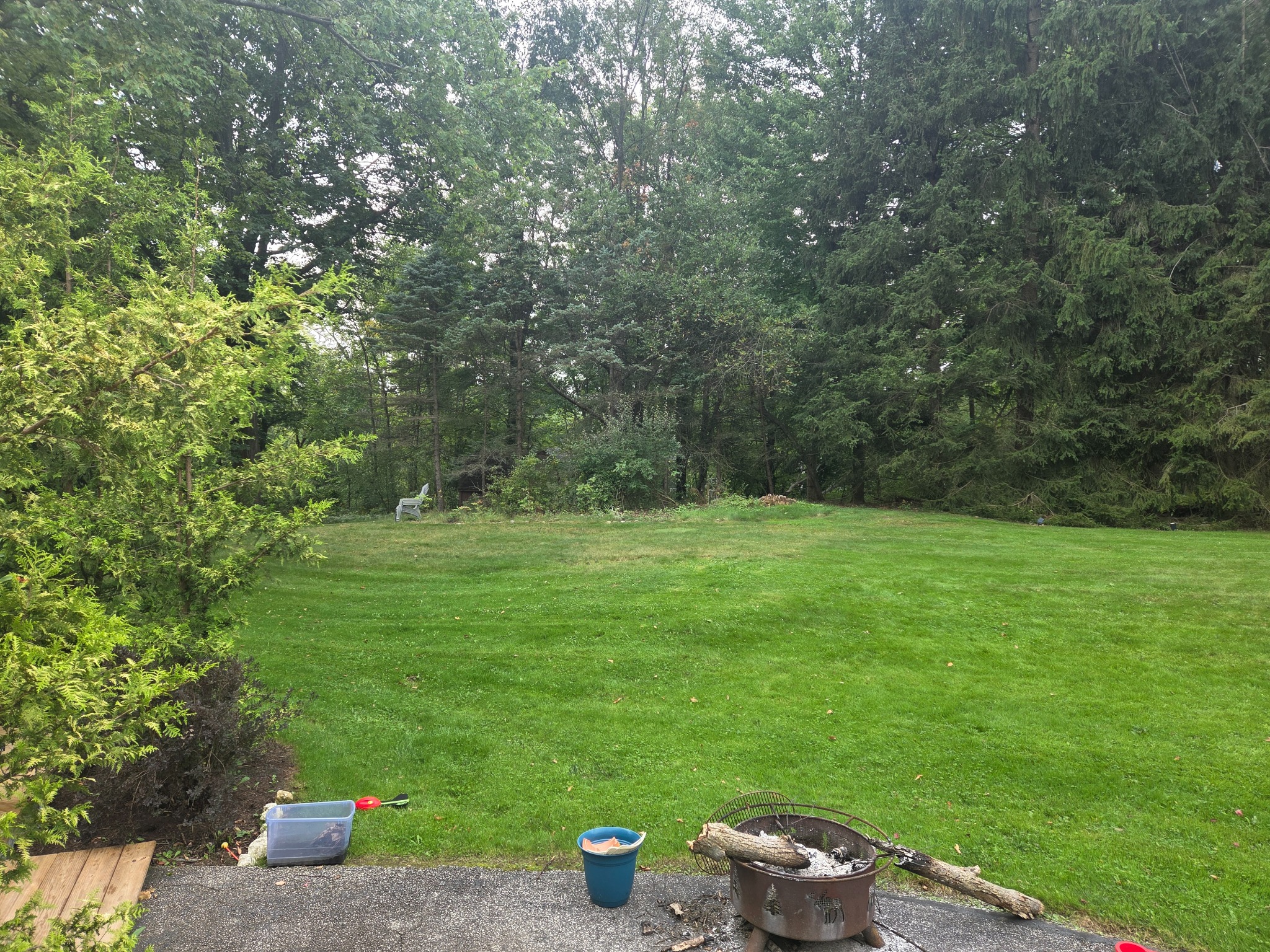
Planning estimate: We expect the complete first season to land near $1,250, with a realistic range of about $930–$1,525. Local prices, delivery fees, fence strength, and reclaimed materials will make the biggest difference.
This list assumes two 3-by-8-foot beds inside a roughly 20-by-10-foot protected area. Before purchasing lumber or soil, we will stake the exact bed and gate locations and confirm that the brightest areas receive the expected 4–6 hours of sun.
1. Raised beds and base
| Item | Quantity | Estimate |
|---|---|---|
| Untreated cedar or ground-contact-rated raised-bed boards | Enough for two 3×8-ft beds, 11–12 in. high | $220–$320 |
| Exterior structural screws | One 1-lb box, 3–3½ in. | $18–$30 |
| Inside corner blocks or brackets | 8 corners | $20–$40 |
| Hardware cloth | Two 3×8-ft bed bottoms, if burrowing pests are active | $45–$80 |
| Cardboard | Enough to overlap beneath paths and beds | $0 |
2. Wildlife fence and gate
| Item | Quantity | Estimate |
|---|---|---|
| 7–8-ft deer netting or welded wire | At least 70 linear ft | $90–$170 |
| 8-ft posts | 8–10 posts | $90–$160 |
| Rabbit barrier or ½-in. hardware cloth | 60–70 linear ft, 24 in. high | $55–$100 |
| Gate hardware and simple lumber frame | One 30–36-in. gate | $45–$90 |
| Fence staples, ties, and ground anchors | One assorted set | $25–$45 |
Our wooded edge makes animal protection a priority. The lower 24 inches need smaller openings for rabbits and groundhogs; the taller outer barrier is intended to discourage deer. We will adjust the final design after checking local rules and observing which animals actually visit the site.
3. Soil, compost, and paths
| Item | Quantity | Estimate |
|---|---|---|
| Screened topsoil/compost blend | About 2 cubic yards for two 3×8×1-ft beds | $130–$220 |
| Finished compost | ¼–½ cubic yard if not included in the blend | $35–$75 |
| Natural mulch | 2–3 bags for bed surfaces | $12–$25 |
| Arborist wood chips | About 2 cubic yards for paths | $0–$80 |
Two beds measuring 3×8 feet and 12 inches deep require about 48 cubic feet of material, or roughly 1.8 cubic yards before settling. Buying a local bulk blend should be substantially easier—and often less expensive—than carrying dozens of bags uphill.
4. Irrigation and first-season plants
| Item | Quantity | Estimate |
|---|---|---|
| 50-ft soaker hose or basic drip kit | One kit | $30–$65 |
| Pressure regulator/backflow preventer | One set if using drip irrigation | $20–$40 |
| Hose timer | One simple single-zone timer | $25–$50 |
| Cool-season vegetable seeds/starts | Lettuce, kale, chard, radish, beets and herbs | $35–$70 |
| Native perennials | 8–12 starter plants around the enclosure | $70–$140 |
Four to six hours of sun favors leafy vegetables and many herbs over crops that demand long, hot days. We will place any tomatoes or peppers in the brightest corner and treat them as an experiment rather than the backbone of the first harvest.
What to buy first
- Stakes and mason line: Confirm the footprint, paths, gate swing, and reach.
- Fence materials: Make protection part of the initial build rather than an emergency fix.
- Raised-bed materials: Finalize the beds before ordering soil.
- Bulk soil and wood chips: Coordinate delivery after there is a clear path to the site.
- Irrigation: Install before planting so new starts are not dependent on hand watering.
- Plants: Buy last, after the construction work is finished.
Where we can save
- Request free arborist chips instead of buying bagged path mulch.
- Use clean, tape-free cardboard beneath paths instead of landscape fabric.
- Compare delivered bulk soil with the true bagged-soil volume required.
- Start easy crops from seed and purchase only slow-growing perennials as plants.
- Build a simple wood-frame gate instead of buying a decorative one.
Where we will not cut corners
- Rot-resistant or properly rated bed materials
- Strong corners and exterior-rated fasteners
- A latch the kids can operate but animals cannot push open
- A soil blend from a reputable local supplier
- Reliable watering during establishment
Before ordering
- Call 811 before digging post holes.
- Check the exact sun pattern again after nearby trees leaf out.
- Confirm delivery access and where bulk material can be dumped.
- Measure the slope from the high side to the low side.
- Review neighborhood or municipal fence requirements.
Useful planning references
- Ohio State University Extension: spring garden preparation
- Ohio State University Extension: raised-bed planting
- Vegetable-garden planning, fencing, soil, and watering overview
Affiliate note: This page does not currently contain paid affiliate links. If links are added later, we may earn a commission at no additional cost to the reader. Prices are planning estimates and should be checked before purchase.
See the full project budget